
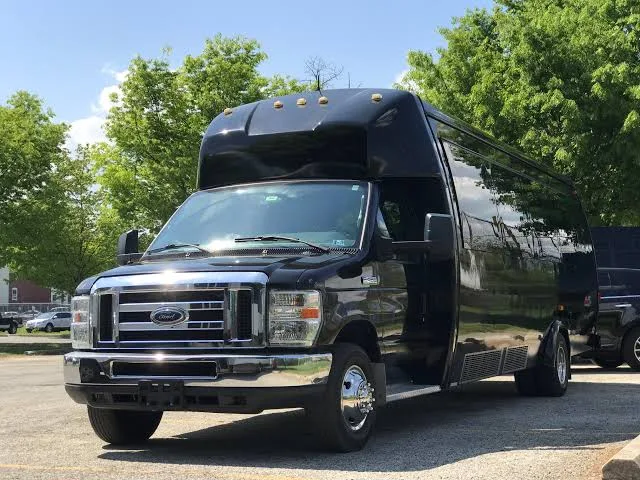
Bay Area companies use shuttles to get employees from BART and Caltrain to the office, to move conference guests between hotels and venues, and to take teams to offsites. A well-planned shuttle saves parking, reduces stress and helps people arrive on time. This guide explains how to plan corporate shuttle service step by step.
Quick Answer: How Do I Set Up a Corporate Shuttle?
Start with your riders and routes, choose a vehicle size that matches peak ridership, set a schedule around shift times or event sessions, and work with one transportation company that can manage drivers, backups and changes. Recurring shuttles are usually priced as a monthly program, while one-time events are usually priced by the hour.
Types of Corporate Shuttles
| Type | What it does |
|---|---|
| Commuter shuttle | Links offices with BART, Caltrain or park-and-ride lots |
| Campus loop | Moves staff between buildings or nearby campuses |
| Conference shuttle | Loops between hotels and a convention center |
| Offsite transfer | Takes a team to a retreat or event and back |
| Airport group transfer | Moves visiting teams between airports and hotels |
Step 1: Understand Your Riders
Survey employees or event attendees. Where do they start? What time do they need to arrive? How many will ride at the busiest moment? Peak ridership, not the daily total, decides how big your vehicle needs to be and how often it should run.
Step 2: Map the Routes
Keep routes simple and predictable. One or two clear pickup points work better than many small stops. For a station shuttle, a direct run from the station to the main entrance is usually best. For conferences, loop between the main hotels and the venue.
Step 3: Choose the Right Vehicle
| Riders at peak | Suggested vehicle |
|---|---|
| Up to 14 | Executive Sprinter or Shuttle Sprinter |
| 15–19 | 19 passenger shuttle bus |
| 20–27 | 27 passenger shuttle bus |
| 28–36 | 36 passenger shuttle bus |
| 40+ | Motor coach |
Step 4: Build the Schedule
For commuter shuttles, run more often during morning and evening peaks and less often midday. A 15 to 20 minute frequency at peak keeps waits short. For conferences, match departures to session start and end times, and add a late run after evening events.
Step 5: Communicate With Riders
- Publish the schedule on your intranet or event app.
- Use clear signs at pickup points.
- Share a contact number for delays or questions.
- Review ridership after the first few weeks and adjust.
Benefits of a Company Shuttle
- Less parking demand at the office
- Easier commutes that help with hiring and retention
- On-time arrivals for meetings and events
- Productive time for riders who can read or work on the way
- Lower emissions than many single-occupancy cars
Budgeting for a Corporate Shuttle
Costs depend on the vehicle size, hours of service per day, number of days and the route. Recurring programs are typically quoted monthly and can be adjusted as ridership grows. Compare the total cost with the cost of parking, rideshare reimbursements and employee time lost in traffic.
Frequently Asked Questions
How many shuttles does my office need?
It depends on peak ridership and how often you want the shuttle to run. One vehicle on a 15 to 20 minute loop is enough for many offices.
Can we run shuttles only on certain days?
Yes. Many companies run shuttles only on in-office days or during specific events.
Do you provide shuttles for conferences at Moscone Center?
Yes. We run hotel loops for conferences in San Francisco, San José and Santa Clara.
Start Your Shuttle Program
See our corporate transportation services, call (925) 315-7150 or request a quote with your routes and rider numbers.